Employee Login





Set times
Visits at agreed times — 10 p.m. pool lock-up, 6 a.m. gate check, a 2 a.m. walk of the lot. Staff and residents know when to expect the officer.
Best for Amenity lock-ups, opening and closing checks, alarm-arming with staff
Mobile patrol security services · California · PPO #121572
Citiguard's mobile patrol security services put a uniformed officer in a marked Citiguard vehicle at your property at set times, randomized times, or both — to walk the grounds, lock up what needs locking, deal with what shouldn't be there and send you a time-stamped photo report after every visit.
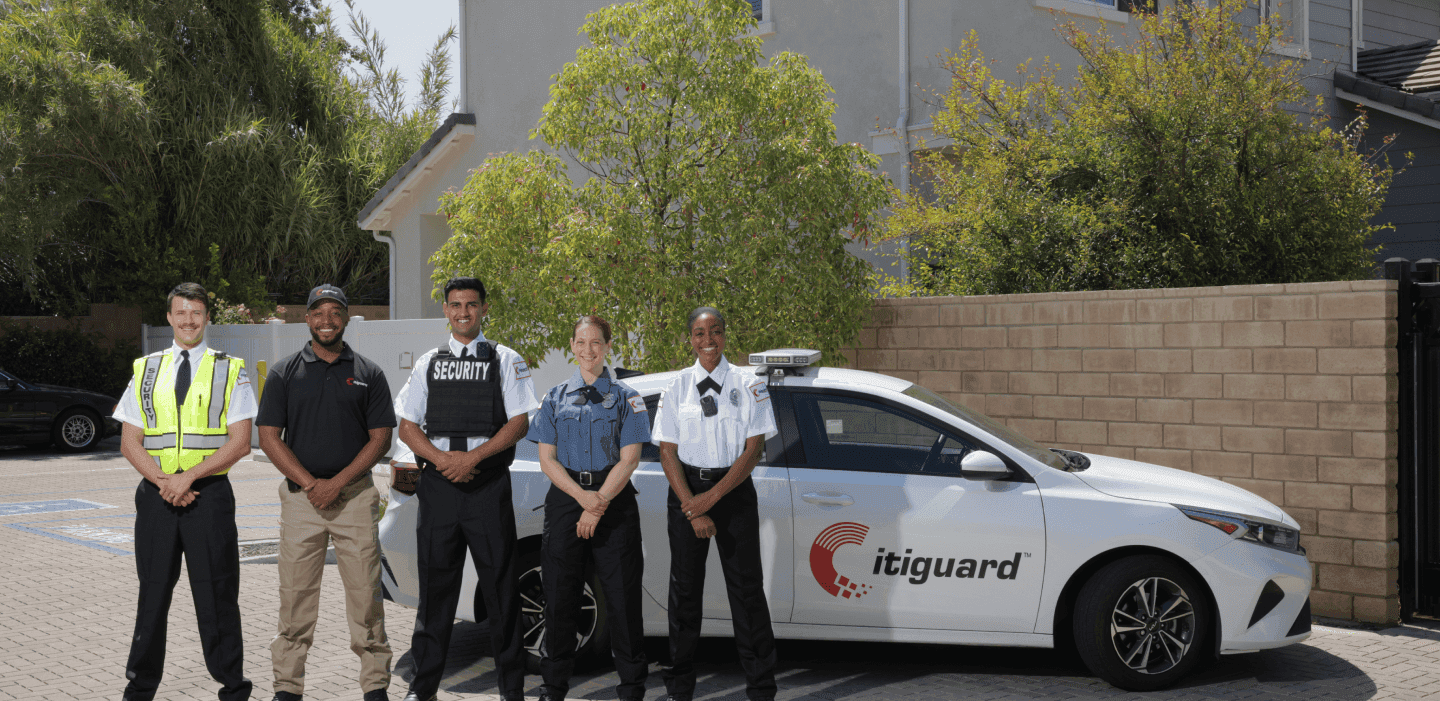
A marked vehicle patrol (also called a mobile security patrol) is a licensed security officer who drives to your property in a clearly marked security vehicle, walks a set of checkpoints, completes agreed tasks such as locking a pool or checking a gate, documents anything out of place with GPS-verified, time-stamped photos, and moves on to the next visit. Citiguard runs patrol routes across California from its Woodland Hills headquarters and branch offices; visits are priced per visit, so a property buys the coverage it needs rather than a full shift.
Every visit follows the post orders written for your property. Here is the shape of one.
The officer arrives in a marked Citiguard vehicle and logs the visit start in CitiTrac.
Gates, doors, parking areas, fence lines and any spot you named — on foot, with a GPS-verified, time-stamped photo at each.
Pool, gym, laundry, mailroom or clubhouse closed and locked on the posted schedule; alarms set with staff where arranged.
Trespassers asked to leave, parking issues noticed, lights out and graffiti photographed. The officer tries to resolve a problem before calling law enforcement or your manager.
The visit entry — checkpoints, photos, actions, who was notified — is delivered through CitiTrac to the contacts you named.
Visit length depends on the property and the checklist; a small lot with two checkpoints takes minutes, a large community with amenity lock-ups takes longer. Checkpoints and tasks are written into the post orders so you know what you are paying for.
Many patrol companies decide this for you. Citiguard asks. The right answer depends on whether the visit has a job to do at a fixed time, or exists to keep people guessing.
Visits at agreed times — 10 p.m. pool lock-up, 6 a.m. gate check, a 2 a.m. walk of the lot. Staff and residents know when to expect the officer.
Best for Amenity lock-ups, opening and closing checks, alarm-arming with staff
Visits inside an agreed window, not at a predictable time. Anyone watching the property cannot plan around the patrol.
Best for Deterrence against trespassing, dumping, break-ins and loitering
Fixed visits for the tasks that have a clock, randomized visits in between for presence. A common choice for HOAs and business parks.
Best for Communities and multi-tenant properties with both lock-ups and overnight deterrence
Pick from the list, add what your property needs, and it goes into the post orders. Nothing is assumed.
Towing and parking enforcement happen only under your written policy and California Vehicle Code §22658 — see the rules below.
A patrol is not a cheaper guard. It is a different tool. This is how to tell which one your property needs — or whether it needs both.
| What matters | Marked vehicle patrol | On-site security officer | Post + patrol |
|---|---|---|---|
| Presence | At the property during each visit; visible, unpredictable | Continuous for the staffed hours | Staffed hours plus overnight visits |
| Best for | Lock-ups, after-hours checks, deterrence across large grounds, several nearby properties | A gate, lobby or entrance that must be covered every minute of a shift | Communities with gate traffic by day and large grounds by night |
| What you receive | GPS-verified visit log with time-stamped photos; incident reports | Daily activity report; incident reports; supervisor visits | Both report streams through CitiTrac |
| Priced by | Visits per night × properties on the route | Hours × officer type | Post hours + patrol visits |
| The limit | No one is on site between visits | One post cannot see the whole property | Costs more than either alone |
Unsure? Describe the property and the problem and a security consultant will say which model fits. About on-site security guards
Typical 2026 ranges from the Citiguard cost guide. Every route is quoted individually — the figures below are typical California ranges, not a rate card.
A visit is one officer, one marked vehicle, one pass through your checklist. Several properties on one route share the drive, which is what keeps the per-visit price low.
| Coverage | Per month | Typical monthly range |
|---|---|---|
| Patrol route, 1 visit a night | 30 visits | about $750–$1,800 |
| Patrol route, 2 visits a night | 60 visits | about $1,500–$3,600 |
| Patrol route, 3 visits a night | 90 visits | about $2,250–$5,400 |
| For comparison: unarmed post, 8 hours a night | 240 hours | about $6,000–$9,600 |
Figures come from Citiguard's 2026 security guard cost guide and are typical ranges, not a quote. Read the full cost guide
Get a written quoteA patrol officer works alone, at night, on your property. Citiguard's standard for the people in marked vehicles is higher than for a staffed post.
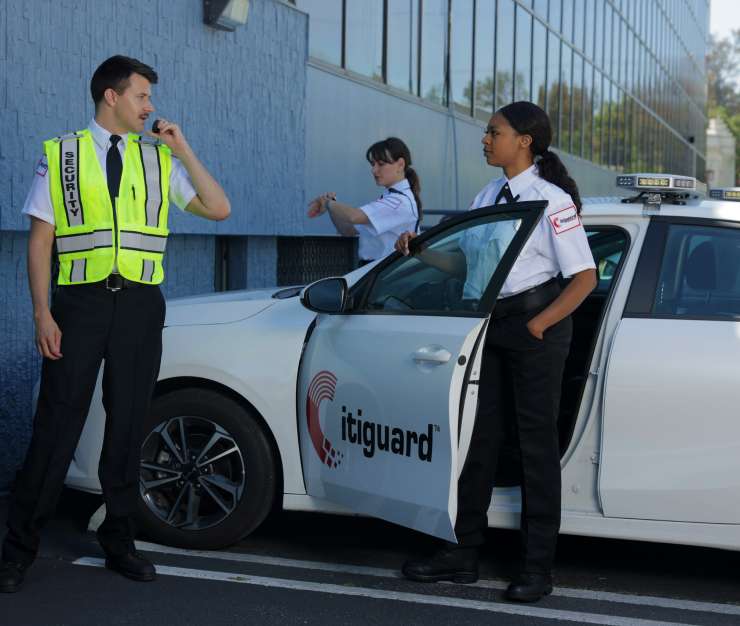
A patrol you cannot verify is a patrol you are taking on faith. CitiTrac records every visit with GPS at each checkpoint and time-stamped photos, so a manager or board can see what was checked, when, and what happened.
Neighborhoods, HOAs and multi-property owners describe what showing up looks like. Quoted as published.
Citiguard patrols my neighborhood and they are amazing at what they do. They are friendly to the children and make sure everyone stays safe. They're always on alert mode. We sleep better having them patrolling during the night.
The guards are always pleasant to deal with. I like the new software that they have offered [our] HOA — everything is live and we get to see what the guards are doing at the complex. I can even tell when they have locked up the pool area.
They are extremely professional and attentive to details. I use these services to patrol a few of our properties throughout the year. I've never encountered any issues. I feel more at ease and safe using this company.
I called at 4pm and by 6pm the security guard had shown up in a patrol vehicle and fully uniformed. As the security guards were rotated, they continued to be professional and attentive to our needs. Sami was so helpful throughout the entire process.
Some of the California organizations we’ve worked with.













Patrol routes run across California, dispatched 24/7 from the Woodland Hills headquarters and branch offices in Rancho Cucamonga, Bakersfield, Sacramento, Oroville and Redding. A route can cover neighboring properties, so a small site shares the drive with others nearby.
Each links to the official source, so you can check it yourself and ask the same of any provider.
Any company selling security patrol services in California must hold a Private Patrol Operator license, and every officer must hold a BSIS Guard Card — DOJ/FBI fingerprinting and Power to Arrest training before registration, 32 hours of skills training within the first six months, 8 hours a year after that — and carry it on duty. Verify any provider before you sign. Citiguard is PPO #121572.
Verify a license on bsis.ca.govA patrol officer can tell a trespasser to leave on the owner's behalf, document the encounter, and call law enforcement when someone refuses or a situation escalates. The BSIS Power to Arrest course every guard completes covers when a private person may detain someone and the limits on it. Citiguard's post orders spell out what officers do on your property; the result you want — people gone and a record of it — comes from presence and documentation.
BSIS security guard fact sheetTowing needs posted signs at every entrance (17 by 22 inches, 1-inch letters, with each tow company's phone number and the local law enforcement number) or a 96-hour notice on the vehicle; written authorization from an owner, agent or employee who is present at removal and records the time the vehicle was first observed; and notice to local law enforcement within one hour of the tow. Under a general authorization, the statute generally limits towing to fire lanes, parking within 15 feet of a hydrant and blocked entrances or exits — read the statute and check with your counsel for your property. A Citiguard patrol officer can issue notices, keep the log and be present as your agent — under your written policy.
Cal. Veh. Code §22658 (leginfo)Expand a topic for the specifics.
Citiguard has provided security guard and patrol services in California since 2013 and holds Private Patrol Operator license #121572. Patrol clients get the same model as every assignment: screened, BSIS-licensed officers — with a higher bar for marked-vehicle officers — CitiTrac visit logs with time-stamped photos at no extra cost, field supervisors with 15+ years of experience, a security consultant on call 24/7, a 30-day trial, and no overtime charges except on major holidays. Citiguard was named to the Inc. 5000 list of America's fastest-growing private companies in 2025 and 2026.
The point of a security patrol is to be seen. A marked Citiguard car with company livery is recognized by residents, tenants and anyone who has no business being on the property. It also reassures the people who live and work there: a resident who sees the car at 1 a.m. knows who it is. Officers patrol on foot once on site; the vehicle gets them between checkpoints and between properties.
A consultant reviews the property with you — by phone or video, or on site if you prefer — and writes the post orders: checkpoints, lock-ups, who to notify and when, the visit window and whether times are set, randomized or both. Officers run the route, and the first reports show you what the property looks like at night: which gate was left open, where the lights are out, which lot attracts cars after hours. Many clients adjust the checklist after the first week; changes go through the consultant and take effect on the next visit.
Because a visit is priced per visit, a 20-unit building or a single-tenant lot can buy two overnight checks a night without paying for a shift. Citiguard groups nearby properties onto one route so the officer's drive is shared. The route is still yours: your checkpoints, your post orders, your report. If a route does not yet exist near you, a consultant will say so and quote what a dedicated route costs.
Patrols are often short-term: a vacant property between tenants, a run of break-ins, a construction site before the fence goes up, an event weekend. Send the address, the dates and the concern; a consultant replies with a proposal and the 30-day trial applies to new assignments. Start dates depend on officer and route availability in your area.
Where arranged, a patrol officer can respond to an alarm activation or a manager's call during the coverage window, check the property, document what was found and notify the contacts in the post orders. Citiguard does not install or monitor alarm systems; it responds to them when you ask it to.
Straight answers to what property managers, owners and boards ask before they sign.
A licensed security officer who drives to your property in a clearly marked Citiguard vehicle, walks a set of checkpoints, completes the tasks in your post orders — locking a pool, checking a gate, sweeping a lot — documents anything out of place with GPS-verified, time-stamped photos, and moves on. It is the same thing other companies call a mobile patrol or security patrol service.
Your choice: set times, randomized times inside an agreed window, or both. Set times suit tasks with a clock, such as a 10 p.m. pool lock-up. Randomized times suit deterrence. Many HOAs and business parks use both.
Typical 2026 ranges from the Citiguard cost guide are $25–$60 per visit. One visit a night for a month lands around $750–$1,800; two visits around $1,500–$3,600. The quote depends on visits per night, the length of the checklist and how close the property is to other stops on the route. Every route is quoted individually, with no overtime charges except on major holidays and CitiTrac reporting included.
No. A patrol officer is at the property during each visit and gone between visits; an on-site officer is there for the whole shift. If a gate or lobby must be covered every minute, you need a staffed post. If the need is lock-ups, after-hours checks and visible deterrence across a large property, patrol visits usually fit and cost less. Many properties combine a daytime post with overnight patrols.
As long as the checklist takes. A small lot with two photo checkpoints is a few minutes; a community with amenity lock-ups, a parking sweep and a perimeter walk is considerably longer. The post orders list the checkpoints and tasks, so the visit length is agreed before the first night.
Yes. Closing and locking pools, fitness centers, laundry rooms, mailrooms, clubhouses and gates on a posted schedule is one of the most common tasks on a patrol checklist. Occupants are asked to leave politely, the area is secured and the lock-up is logged with a time-stamped photo.
The officer tries to resolve it on the spot where that is safe and within the post orders — asking a trespasser to leave, closing an open gate, placing a courtesy notice — photographs it, and notifies the contacts you named. Where law enforcement is needed, the officer calls them and stays as the point of contact. Everything goes into the visit entry and, if warranted, an incident report.
Officers can check permits, place courtesy notices and keep the log under your written policy. Towing is governed by California Vehicle Code §22658: posted signs or a 96-hour notice, written authorization from someone present at removal, and notice to local law enforcement within an hour. A Citiguard officer can be the agent on site. Under a general authorization the statute generally limits towing to fire lanes, parking within 15 feet of a hydrant and blocked entrances or exits; check the statute and your counsel for your property.
Where arranged in the post orders, a patrol officer can respond to an alarm activation or a manager's call during the coverage window, check the property, document what was found and notify your contacts. Citiguard does not install or monitor alarm systems.
Citiguard's marked-vehicle officers have at least five years of security experience and come from law enforcement or hold a degree recognized by the Department of Justice. All hold a BSIS Guard Card, pass a BCI background check, court search, DMV record check and drug testing, and carry their registration on duty.
Send the address, the coverage window and the concern; a consultant replies with a proposal. Start dates depend on officer and route availability in your area, and the 30-day trial applies to new assignments.
Patrol routes run across California — Los Angeles, Orange County, the Inland Empire, San Diego, Ventura, the Central Valley, Sacramento and the Bay Area — dispatched 24/7 from the Woodland Hills headquarters and branch offices. Find your county in the service-area directory
Get a patrol quote for your property
Send the property address, the areas or tasks you want checked, the hours that worry you and whether you want set times, randomized times or both. A security consultant reviews it with you and replies with a written proposal.
Tell us about the security services you need. All fields are required except Company Name.
Looking for a job? Visit our Career Center.
For customer support or other inquiries, contact us.