

Healthcare facilities operate on a different rhythm than most businesses. Patients arrive in distress, visitors move through the building at all hours, and staff are focused on care rather than watching the door. That combination makes hospitals, clinics, and urgent care centers uniquely vulnerable, which is exactly why healthcare facility security guards have become such a critical part of how California medical facilities protect the people inside them.
A Different Kind of Security Environment
Unlike a retail store or office building, a healthcare facility cannot simply restrict access to keep everyone safe. Patients need to be able to reach emergency rooms quickly, families need to visit loved ones, and staff need to move freely between units. Security in this setting has to protect people without getting in the way of care, which requires guards trained specifically for healthcare environments.
Access Control Without Disrupting Care
Managing who enters sensitive areas, maternity wards, medication storage, psychiatric units, is one of the most important functions a healthcare security team provides. Guards verify visitors and monitor entry points without creating the kind of friction that would slow down patient care or family access.
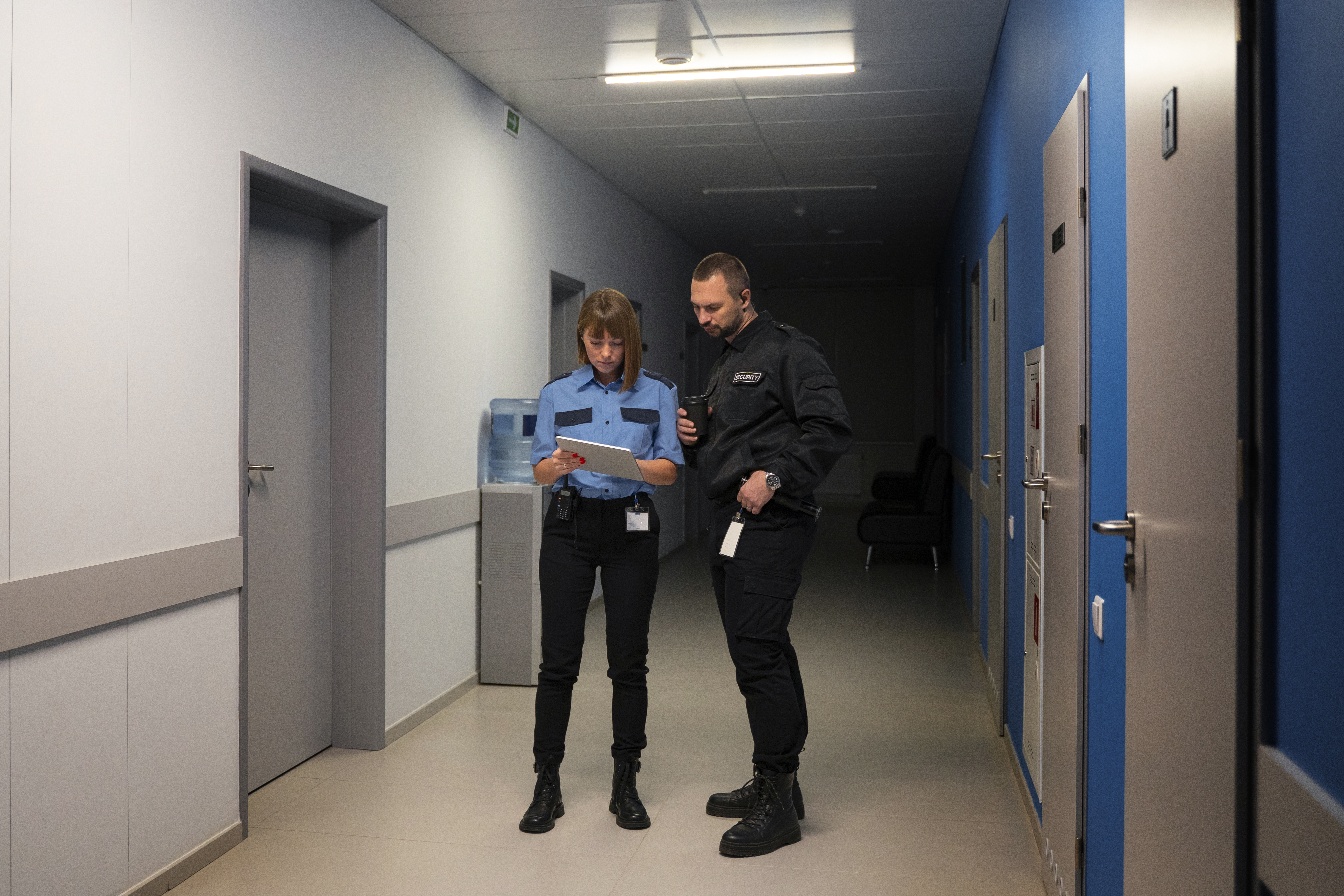
De-escalation in High-Stress Situations
Hospitals see more than their share of high-emotion moments, grieving families, frustrated patients, and individuals in crisis. Guards trained in de-escalation can often resolve a tense situation with communication alone, preventing a stressful moment from turning into a safety incident for staff or other patients.
Emergency Response When Every Second Counts
When something does go wrong, whether it is a medical emergency, a security threat, or a disturbance, an on-site guard can respond immediately rather than waiting for outside help. That immediate presence often determines how quickly a situation is contained and how much disruption it causes to the rest of the facility.

Visitor Management That Protects Patients
Uncontrolled visitor traffic creates real risk in a healthcare setting, from custody disputes to unauthorized individuals attempting to reach a patient. Structured visitor management, including sign-in procedures and escort protocols for sensitive units, gives facilities a way to keep patients safe without treating every visitor like a suspect.
Workplace Violence Prevention in California Facilities
California healthcare employers are held to specific standards under Cal/OSHA’s Workplace Violence Prevention in Health Care regulation, which requires facilities to maintain a violence prevention plan and respond to incidents according to documented procedures. Trained security guards play a direct role in meeting these requirements, from maintaining incident logs to responding to violent situations as they occur.
Why California Facilities Choose Citiguard
Citiguard provides guards trained specifically for the demands of healthcare environments, supporting hospitals, clinics, and outpatient centers across California’s medical facilities with a balance of vigilance and compassion. A free consultation can help your facility identify where coverage is needed most.
1. Why do hospitals and clinics need dedicated security guards?
Healthcare facilities face unique risks, including distressed patients, high visitor traffic, and valuable medical equipment. Dedicated security guards manage access, de-escalate tense situations, and respond quickly to emergencies, helping protect patients and staff without disrupting care.
2. How are healthcare security guards trained differently?
Healthcare security guards receive training in de-escalation, visitor management, and emergency response specific to medical environments. This differs from general security training because guards must protect people without restricting the access patients and families need for care.
3. What is California’s workplace violence prevention requirement for healthcare?
California healthcare employers must comply with Cal/OSHA’s Workplace Violence Prevention in Health Care standard, which requires a written prevention plan, incident logging, and defined response procedures. Trained security guards help facilities meet these requirements in practice.
4. Can security guards help with visitor management in hospitals?
Yes. Guards can manage sign-in procedures, verify visitor identity, and escort individuals to sensitive units such as maternity or psychiatric wards. This structure reduces unauthorized access while still allowing families to visit patients.
5. Do security guards respond to medical emergencies as well as security threats?
Security guards are typically not medical responders, but they are trained to secure the area, alert medical staff, and manage bystanders during an emergency. Their quick response helps contain a situation while clinical staff focus on patient care.