Employee Login


Why Construction Sites Need Security in California
Part of: Construction Site Security

Short answer
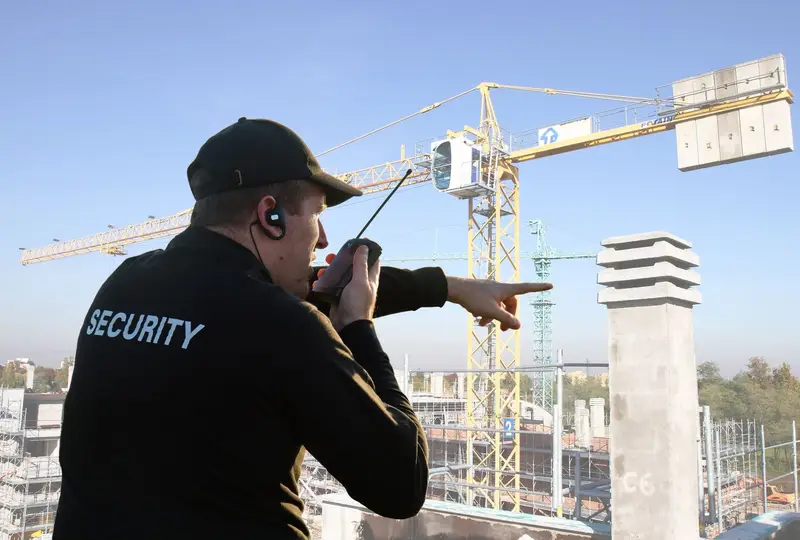
Why do construction sites need security? Because once crews leave, tools, copper, and machinery sit behind temporary perimeter fencing with nobody watching. This guide is for general contractors, developers, and superintendents in California deciding whether a job site needs guards, patrols, or both. Security officers deter theft, vandalism, and unauthorized access, control the gate, and document and report what they see, while the contractor keeps its own safety duties.
What construction site security means in practice
Construction site security is the mix of people and measures that keeps tools, materials, and machinery on the job site and keeps out people who don’t belong. It pairs perimeter fencing, lighting, locked gates, and CCTV with security guards or patrols who cover the hours your crew can’t.
On site, officers control the gate, patrol the fence line and laydown yard, write incident reports, and call police or the fire department.
Do you have to have construction site security?
It depends on the project. Check the owner’s contract and the project’s insurance policies first; either can call for guards, patrols, or fire watch.
The main risks on a construction site after the crew leaves
The importance of construction security is easiest to see in what a job site stands to lose. Most losses trace back to four risks: theft, vandalism, trespassing, and fire during or after hot work. The table below sets out what each one can cost and what helps, and the damage in every row grows with the hours nobody is watching.
Main construction site risks and what helps
| Risk | What it can cost | What helps |
|---|---|---|
| Theft | Replacement cost, idle crews, and schedule slips | Gate checks, equipment counts, and patrols after hours |
| Vandalism | Rework on finished surfaces, broken glass, and graffiti cleanup | A visible officer and incident reports with photos for police |
| Trespassing | Injuries near trenches, scaffolds, and machinery | Perimeter fencing, lighting, signage, and an officer who calls police on intruders |
| Hot-work fire | A spark that smolders after crews leave can spread overnight | A trained fire watch after welding, cutting, or other hot work |
Costs depend on the project; the rows describe the kind of loss, not an estimate.
Two of the four are crimes with set dollar thresholds in California. Penal Code section 487 covers grand theft and Penal Code section 594 covers vandalism, and the next section gives the amounts. Trespassing and fire carry their own costs, from an injured intruder to a building shell lost overnight.
Does your construction site need security?
Most construction sites need some security; how much depends on what stays on site and how long it sits unwatched. The flow below asks three questions in order, and a “no” at any step points to a lighter measure for now.
Does your job site need guards or patrols?
Answer each question for your own site, in order. A "no" stops the flow at that step.
Do tools, materials, copper, or machinery stay on site after crews leave?
If no: Theft exposure is low for now; keep fencing and lighting in repair, and recheck when deliveries start. Hot-work days still call for your own fire prevention procedure.
Yes go to the next question
Does the site sit empty overnight, on weekends, or through holiday shutdowns?
If no: Someone is usually there to notice problems; focus on gate control during working hours and keep a visitor log.
Yes go to the next question
Could someone reach the site or its equipment without passing a locked gate or a watched camera?
If no: Your physical controls cover the gap for now; confirm someone actually responds to camera alerts.
Yes see the outcome below
Outcome: Consider overnight patrols or a posted officer for unwatched hours, and add fire watch on days with welding, cutting, or other hot work.
The questions follow how losses happen: equipment and materials leave after hours, when nobody is on site to notice a truck and trailer at the gate.
California law sets a $950 grand-theft threshold (PC §487), which a single stolen generator, tool load or copper run can easily cross. In California, vandalism causing $400 or more in damage is punishable by up to a year in county jail or a felony sentence, a fine of up to $10,000 (up to $50,000 when the damage is $10,000 or more), or both (PC §594).
Cal/OSHA puts fire protection on the employer for every phase of construction (8 CCR §1920), and welding or cutting triggers a separate fire prevention procedure (8 CCR §4848). That is where hot-work fire watch fits. Both rules sit in the Title 8 safety orders published by the California Department of Industrial Relations. A fire watch officer observes, documents, and calls the fire department; the program stays with the contractor.
When construction sites face the highest risk
Risk peaks when a site is stocked but empty. Long holiday weekends, gaps between trades, and the days right after high-value materials arrive give intruders the most unwatched time.
For example, one officer post covering a 72-hour holiday weekend is about 72 billable hours at $25–$40 an hour (unarmed). These are typical ranges, not a quote. Before the shutdown, ask whether major holidays carry overtime and whether patrol vehicles or equipment are billed separately from the hourly rate.
What to prepare before construction security starts
A comparable quote starts with the same site details sent to every provider, and the checklist below covers them. Gather them first so each provider prices the same hours, gates, and duties.
Before construction security starts
- Write down the site address, the hours to cover, and whether you need armed or unarmed officers.
- List every gate, trailer, and equipment yard.
- Note past theft, vandalism, or trespassing incidents with dates and police report numbers.
- Set officer duties in written post orders.
- Pick a start date and a contact for after-hours calls.
BPC §7582.1 says “A security guard or security officer, within the meaning of this chapter, is an employee of a private patrol operator, or an employee of a lawful business or public agency” at the customer’s or employer’s premises. Ask any provider for its PPO license number.
Business and Professions Code section 7582.26 says a private patrol operator’s uniformed guard “shall wear a patch on each shoulder of his or her uniform that reads “private security” and that includes the name of the private patrol company” that employs them.
What construction site security does not replace
The construction site protection benefits are real, but security does not take over the contractor’s or owner’s own duties. Officers are not police, safety inspectors, or first-aid providers, and they don’t repair damage, insure equipment, or decide when work is safe to resume.
For anyone hiring security, this means you are adding one protective layer, not handing off your risk. Keep your insurance, locks, perimeter fencing, and safety meetings in place, and write the post orders around the gaps those measures leave, such as unwatched hours and open gates.
Key takeaways
- Construction sites need security because tools, copper, and machinery stay on site after crews leave, and nights, weekends, and holiday shutdowns carry the most risk.
- Officers observe, deter, control the gate, document incidents, and call police or the fire department; they don't replace your own safety program.
- Title 8 Section 1920 makes the employer responsible for fire protection; hiring a fire watch doesn't move it.
- An older National Insurance Crime Bureau brochure said nearly 1,000 pieces of commercial equipment were reported stolen each month.
Frequently asked questions
How important is construction site security?
Very important on most active projects, because one loss reaches well past the cost of replacing the item. An older National Insurance Crime Bureau brochure put the recovery rate for stolen heavy equipment at less than 20 percent. A stolen loader idles crews and pushes back the next trade's start.
Do construction sites need security during working hours too?
Often, yes. During work hours, gates stay open for deliveries, crews, and subcontractors, so the risk shifts from break-ins to walk-ins. A daytime officer can check who enters, record who comes and goes, and keep unauthorized people away from active work areas.
Who is responsible for construction site security?
It depends on the contract, so check the owner-contractor agreement for who carries site security during construction. Officers observe and report; the contractor and owner keep their own duties.
Why are construction sites at risk?
Construction sites are exposed because they keep changing. Fencing is temporary, gates move as work progresses, crews rotate, and materials are staged wherever the next trade needs them. According to the National Insurance Crime Bureau, equipment thieves enter jobsites after hours and load equipment onto trailers, then resell it, dismantle it for parts or export it.
Why is safety important in construction?
Safety matters because open trenches, scaffolds, and equipment can hurt anyone who enters the site. Cal/OSHA's Title 8 Section 1509 requires every employer to maintain an effective Injury and Illness Prevention Program. Security supports it by keeping unauthorized people out and reporting hazards like a downed fence.
What is construction security?
Construction security is the mix of people and measures that protect a job site from theft, vandalism, trespassing, and fire risk. It pairs perimeter fencing, lighting, CCTV, and access control with security guards or patrols who observe, control the gate, document incidents, and call police or the fire department.
Sources
- California State Legislature (California Legislative Information). “Penal Code Section 487.” Accessed November 10, 2026.
- California State Legislature (California Legislative Information). “Penal Code Section 594.” Accessed November 10, 2026.
- California Department of Industrial Relations. “California Code of Regulations, Title 8, Section 1920.” Accessed November 10, 2026.
- California Department of Industrial Relations. “California Code of Regulations, Title 8, Section 4848. Fire Prevention and Suppression Procedure.” Accessed November 10, 2026.
- California Department of Industrial Relations. “California Code of Regulations, Title 8, Section 1509. Injury and Illness Prevention Program.” Accessed November 10, 2026.
- California Legislative Information. “California Business and Professions Code § 7582.1.” Accessed November 10, 2026.
- California State Legislature (California Legislative Information). “Business and Professions Code.” Accessed November 10, 2026.
- National Insurance Crime Bureau. “Commercial Heavy Equipment Theft: A Heavy-Duty Problem for U.S. Businesses.” Accessed November 10, 2026.